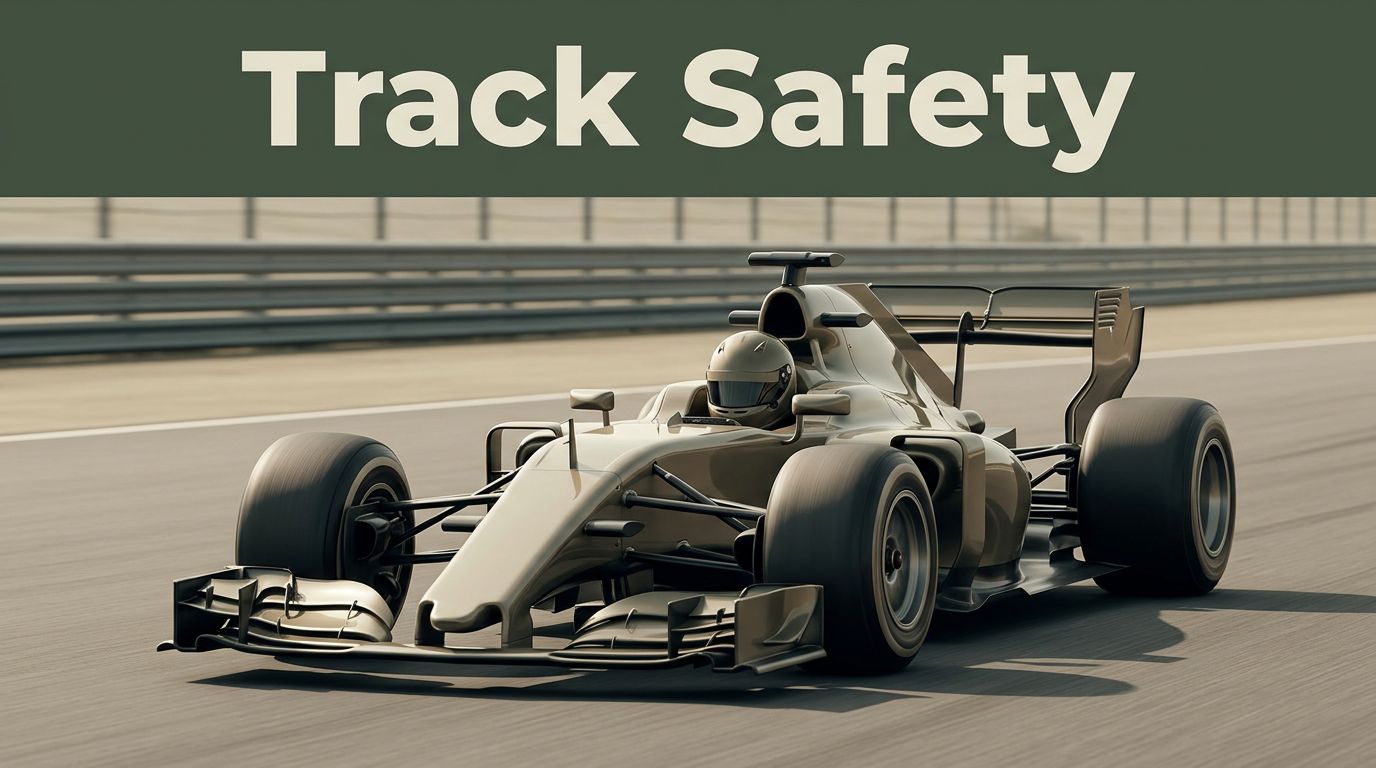
Picture this: You’re mid-lap at your favorite track day, hitting 130 mph on the straight. The rear end suddenly breaks loose in a high-speed spin. You slam the wall, but moments later, you climb out shaking it off with just a bruise. That’s what happened to racer Alex last season; he credits his prep and gear for saving the day.
Motorsport studies back it up. Proper racing gear and checks cut serious injury risk by over 80 percent, according to FIA data from recent track events. So you get the adrenaline rush without the nightmare aftermath.
You hit the track for the thrill, right? Speed, competition, that perfect apex. But one slip can end your fun fast. Track racing safety keeps worry away, so you focus on beating your lap time.
Smart moves make all the difference. First, nail your gear essentials like helmets and suits that fit right. Next, do thorough car checks to spot issues before they bite. Then master track rules and flags to stay sharp. You’ll also pick up driving smarts for those tricky corners, plus mindset tips to stay calm under pressure.
These simple steps turn risky runs into confident laps. Ready to gear up? Let’s start with what you wear.
Essential Gear That Shields You from Crashes and Fire
Your racing gear acts like body armor on the track. It absorbs massive impacts from crashes and blocks flames in seconds. Beginners need the basics, while pros layer up for pro events. Always buy Snell or FIA-certified items because uncertified gear fails fast. Fit counts most; loose pieces shift in a wreck and leave you exposed. Expect to spend $1,500 to $4,000 total for quality setups. Check shops like Summit Racing or Jegs for stock. Inspect regularly for cracks, worn liners, or frayed seams. Replace suspect items right away.
Helmets and Neck Braces: Your Head’s Best Friends
Helmets save lives by cushioning your skull in high-speed hits. Go for full-face models; they shield your whole head plus jaw from debris. Open-face works for vintage bikes, but skip it for cars because it exposes too much. Look for Snell SA2020 or newer ratings; they pass brutal drop tests. Snell Memorial Foundation sets the bar.
Fit yours perfect. Slide two fingers above your eyebrow; if they fit snug without pressure, you’re good. Measure head circumference at eyebrows for size: small (21-22 inches), medium (22-23), large (23-24). Try it on with balaclava first.
Next, add a HANS device. Straps tether your helmet to shoulder belts. In crashes, it stops your head from snapping forward or sideways, cutting neck injury risk by 50 percent. Many tracks like SCCA events require it. Costs run $600 to $1,000; pair with a compatible helmet.
Replace helmets every five years. Foam compresses over time and won’t protect as well.
Here’s a quick spec list for top picks:
- Bell Racing RS7: Snell SA2020, $900, lightweight carbon shell.
- Arai GP-6 RC: FIA 8860-2018, $1,200, superior ventilation.
- Simpson Hybrid Pro Lite: Snell SA2020, $700, affordable entry.
Check for liner wear or shell cracks monthly.

Suits, Gloves, and Shoes Built for Heat and Impact
Fire suits use nomex layers to resist 2,000-degree flames for 10 seconds. SFI 3-2A/5 or FIA 8856-2018 ratings prove it. Multi-layer builds start with breathable base, nomex middle, outer shell. New 2026 fabrics boost stretch without bulk.
Gloves need SFI-rated palms for grip on sweaty wheels. Reinforced knuckles block shifter scrapes. Shoes stay non-melting with ankle guards; no sneakers allowed.
Layer fire-retardant underwear beneath. It wicks sweat and adds burn protection. Pro tip: machine wash suits inside out, air dry only.
Take 2024 VIR incident. Driver spun into barriers, suit caught fire, but nomex held; he walked away with minor burns. Gear works.
Costs: Suit $400-$1,500, gloves $100-$300, shoes $150-$400.
Key specs include:
- Alpinestars Tech-Air Suit: SFI 3-2A/15, $1,200, flexible for movement.
- RaceQuip Ironman Gloves: SFI 5-rated, $120, palm grips.
- Pirelli DH Pro Shoes: SFI non-melt, $250, heat-resistant soles.
Spot wear? Test flame resistance yearly at certified shops.
Balaclavas and Socks: Small Items with Big Protection
Don’t skip these. Fire-retardant balaclavas cover neck and face gaps, blocking burns where helmets end. Nomex versions char but don’t melt into skin. Socks do the same for feet; cotton ignites fast.
Wear them under everything. They wick moisture too, so you stay cool.
Maintenance stays simple. Wash in cool water with mild soap after each day. Dry flat; heat shrinks fibers. Replace if stretched or stained.
Pick SFI-rated pairs for $20-$50. Brands like RaceQuip balaclavas fit most.
These bits complete your shield. Small cost, huge payoff in a fireball.
Prep Your Car Thoroughly to Dodge Mechanical Nightmares
Your gear protects you, but a solid car prep routine keeps mechanical gremlins at bay. Loose parts or worn brakes cause more track crashes than bad driving. Start DIY checks weekly, then get pro inspections before events. Clubs like SCCA and NASA offer free checklists to guide you. Follow them, and you’ll spot issues fast. Build a pre-race ritual: unload the car, walk around it, then dive into specifics. This habit cuts failure risk by half, based on track data.
Tires, Alignment, and Brake Checks That Stop Trouble Fast
Tires grip the track; ignore them, and you spin out. Check pressure cold at 32 psi for most setups, then monitor hot temps, which rise 10 psi under load. Use a gauge after cool-down sessions. Tread depth needs at least 4/32 inch minimum; measure with a penny, Lincoln’s head down. Worn spots lead to hydroplaning in wet sessions.
Brakes demand attention too. Pads should measure over 3mm thick; calipers must slide free without binding. Brake fluid boils at high temps, so swap to high-boil DOT 4 or 5.1 every season. Test by heating samples if you can.
Alignment affects cornering. Toe-in around 1/16 inch per side helps stability. Corner weighting balances loads; jack the car, scale each wheel. Aim for 50/50 left-right, adjust springs or bars. New tech like 2026 tire pressure sensors alert via app to pressure drops mid-session.
Run these steps before every outing:
- Inflate tires cold, note pressures.
- Inspect tread and sidewalls for cuts.
- Measure brake pads, top off fluid.
- Bounce corners for even rebound.
- Drive a slow lap, feel for pulls.
Download the SCCA tech inspection form for full details. Pros charge $100 for corner weighting; worth it yearly.

Technician gauges tire pressure on a lowered race car in the pits.
Fluid Levels, Belts, and Battery Securement
Fluids lubricate everything; low levels seize engines mid-lap. Pop the hood, check oil cold first, then hot after runs. Top to full with race-spec synthetic. Coolant mix 50/50 prevents boil-over; pressure test the cap at 16 psi. Fuel systems need clean filters; scan for leaks around injectors.
Belts snap under heat, so squeeze them firm, no cracks. Tensioners should hold steady. Loose parts vibrate loose; zip-tie extras, double-nut suspension bolts. Batteries shift in corners, sparking fires. Secure with straps rated 5000G, vent hoses away from exhaust.
Dangers stack up fast. A loose alternator belt cost one driver his alternator at VIR last year. He coasted blind.
Follow this quick routine:
- Wipe dipsticks clean, recheck levels.
- Look for wet spots under the car.
- Tug belts, spin pulleys by hand.
- Shake battery, tighten clamps.
- Rev engine, listen for rattles.
NASA’s HPDE tech sheet lists extras like harness dates. Do it nightly during race weekends.
Add Roll Cages, Harnesses, and Fire Suppressors
Safety mods shine in big wrecks. Roll cages protect from rollovers; weld-in chromoly tubes follow series rules. SCCA mandates them for wheel-to-wheel. Hire certified welders; DIY risks weak joints.
Upgrade to 5- or 6-point harnesses. They lock you firm unlike stock belts. Fit snug over shoulders, lap across hips, no twists. Check expiration every two years. Quick-release works best.
Fire suppressors mount near driver; auto-activate at 175F. Plumb to cockpit and engine bay, refill after discharges. Novec 1230 gas beats old halon.
Install when? Street cars skip for HPDE, add for racing. Costs: cage $2,000, harness $300, extinguisher $400.
Steps to add them right:
- Measure cage specs per class rules.
- Test-fit harness on seat.
- Mount bottle with steel brackets.
- Inspect welds post-install.
These upgrades saved lives at Daytona last season. Check NASA safety rules for your series. Your car now matches your gear resolve.
Decode Track Flags and Etiquette to Race Smoothly in Groups
You gear up and prep your car, but groups add chaos. Flags signal dangers fast, while etiquette prevents pileups. Master them, and you race smooth with others. Spot flags early because reactions save lives. Follow these basics, and traffic feels easy.
Flags You Must Spot Instantly to Stay Out of Harm
Flags control the pace. Corner workers wave them high for urgency. Stationary flags mean steady warnings; waving ones demand quick action. Green starts the show clean. Lift off brakes, go full throttle.
Yellow flags slow you down. Stationary yellow tells you to ease up, no passing. Ahead lies debris or oil. Waving yellow means crash nearby; brake hard, no passes at all. Double yellow stacks the risk higher.
Black flags pull you in. Personal black (with your number) means pit now for mechanical or rules breaks. Waving black clears the track entire. Checkered ends the session; cool down one lap.
Here is a quick reference for actions:
| Flag Color | Meaning | Your Action |
|---|---|---|
| Green | Track clear, racing on | Accelerate fully, hold line |
| Yellow (stationary) | Caution ahead, no pass | Slow down, be ready to stop |
| Yellow (waving) | Danger close, incident | Brake immediately, no passing |
| Black (personal) | Issue with your car | Pit lane immediately |
| Checkered | Session over | Cool down lap, exit track |
Check SCCA flag rules for your event; IMSA adds meatball flags for fluids. Practice spotting them in mirrors first.
<function_call name=”generateImage”> Diagram of common track racing flags including green, yellow stationary, yellow waving, black, and checkered. Bold branded editorial style with one large headline “Track Flags” in title case using bold geometric sans-serif font on a single edge-to-edge horizontal muted dark-green band near the top (15-22% height), clear focal subject of flags below in realistic photo style, high contrast, no extra text or decorative elements. Flags You Must Spot Instantly to Stay Out of Harm Visual guide to racing flags and their urgent meanings </function_call>
Safe Passing Moves and Point-By Signals
Passing works in zones only. Check mirrors constant because blind spots hide cars. Pass on straights, not corners. Inside line suits left-hand tracks; outside gives room.
Wait for a clear gap. Signal first with a point-by: tap helmet, point to the car ahead. They thumbs-up back, then go. No dive bombs; they spin everyone. Mirror check again mid-pass.
IMSA rules ban passes outside zones. Local tracks post them at starts. Stick to lines, and you build trust fast.
Common signals keep it simple:
- Point-by: You want past; they nod yes.
- Thumbs up: Thanks after clean pass.
- Waving off: No go; back off quick.
Practice in open track first. One bad pass tangles three cars easy.
Group Positioning and Communication Basics
Position right to avoid squeezes. Novice lines keep you predictable; pros weave around. Stay mid-pack steady because the station wagon effect bunches tails. Front pulls away, back closes fast.
Radio helps if your group allows. Call positions clear, like “car off at turn three.” Keep chatter short. NASA HPDE groups use spotters for traffic flow.
Hold gaps at two seconds minimum. Mirror scan every corner. You lead? Point next car by safe. Builds confidence so you focus on laps, not wrecks. <function_call name=”getRelevantLinks”> Skip Barber racing school defensive driving track tips vision scanning </function_call> <function_call name=”getRelevantLinks”> trail braking techniques track racing Skip Barber pro drivers </function_call> <function_call name=”getRelevantLinks”> track racing rain driving wet line overheating debris incidents </function_call> <function_call name=”getRelevantLinks”> real track racing crashes prevented defensive driving examples </function_call>
Cultivate a Sharp Mindset and Master Emergency Responses
Your gear fits perfect, your car runs smooth, and flags make sense. Now sharpen your mind. A clear head spots trouble early and reacts right. Fatigue or ego clouds judgment fast, so build habits that keep you locked in. Practice what-ifs too; they turn panic into plan. You owe it to yourself and the group. Let’s break it down.
Build Focus with Pre-Race Rituals and Hydration
Start pre-race rituals early. They calm nerves and boost sharpness. First, breathe deep with the 4-7-8 method. Inhale four counts, hold seven, exhale eight. Do five rounds; it drops heart rate quick. Next, eat smart two hours before. Grab oats with bananas for steady energy, or nuts for fats that last. Skip heavy meals because they slow you down.
Hydrate constant. Drink 16 ounces of water with electrolytes hourly. Dehydration hits focus first; you drift wide in corners. Rest matters too. Sleep eight hours night before. Spot fatigue signs like yawning or heavy eyes. If they creep in, pit early.
Visualize laps in your head. See the apex, feel the brake point. Pros do this daily; it cuts lap times and errors. Avoid ego pushes. Don’t chase a ghost lap if tires fade. Stay responsible, pass clean.
Build your ritual like this:
- Wake early, hydrate first thing.
- Light breakfast, then breathing.
- Walk the track, note bumps.
- Visualize three full laps.
- Check mirrors for fatigue.
These steps stack calm on your skills. You enter the car ready.

Driver closes eyes for focused breathing before session start.
React Fast: Spin Recovery, Fire, or Crash Steps
Emergencies hit sudden. Know steps cold because seconds count. Practice in parking lots first. Muscle memory saves you.
For spins, follow four steps. One, lift off throttle smooth; don’t stab brakes. Two, countersteer sharp into the slide. Three, look where you want the nose to point. Four, ease throttle back as grip returns. Works for rear or front ends. Skip Barber’s spin recovery guide shows it clear.
Fires need speed. Hit the master kill switch first. Find it on dash or near steering; red button or pull handle cuts power and fuel. Grab extinguisher from your side, aim at base of flames, sweep side to side. Yell for marshals if flames grow.
After crashes, extract safe. Turn off engine with key or kill switch. Undo harness five-point clips quick. Kick out window if door jams; use door bar as brace. Climb out feet first, away from traffic. Signal okay or hurt with thumbs.
Run these drills:
- Simulate spin in empty lot, nail four steps.
- Locate kill switch blindfolded.
- Practice extinguisher pull and aim.
- Time harness release under 10 seconds.
What-ifs build instinct. Picture spin at turn five; run steps in mind. Fatigue? Pull over before it bites. You stay safe, others too. Responsibility wins races.
<function_call name=”getRelevantLinks”> track racing spin recovery four step technique </function_call> <function_call name=”getRelevantLinks”> racing master kill switch location and fire extinguisher use </function_call> <function_call name=”generateImage”> Race car in controlled spin recovery on track, driver countersteering smoothly. Bold branded editorial style with one large headline “Spin Recovery” in title case using bold geometric sans-serif font on a single edge-to-edge horizontal muted dark-green band near the top (15-22% height), clear focal subject below in realistic photo style, high contrast, no extra text or decorative elements. React Fast: Spin Recovery, Fire, or Crash Steps Step-by-step visual of spin recovery technique in action </function_call>
Conclusion
You now know the top five ways to stay safe on the track. First, gear up with Snell-certified helmets, HANS devices, and fire-resistant suits. Second, prep your car through tire checks, fluid levels, and safety mods like roll cages. Third, master flags from green to black for quick reactions. Fourth, use point-by signals and group positioning to pass clean. Fifth, build mindset rituals plus spin recovery steps to handle chaos.
These steps saved Alex in that high-speed spin you read about at the start. They cut risks so you lap with confidence. Most importantly, audit your gear today. Run through your helmet fit and suit seams right now. Then join a safety course at Skip Barber Racing School or SCCA events for hands-on practice.
What’s your go-to safety tip? Drop it in the comments below. Share this post with your track crew, and subscribe for more racing advice. Safety means more laps ahead.