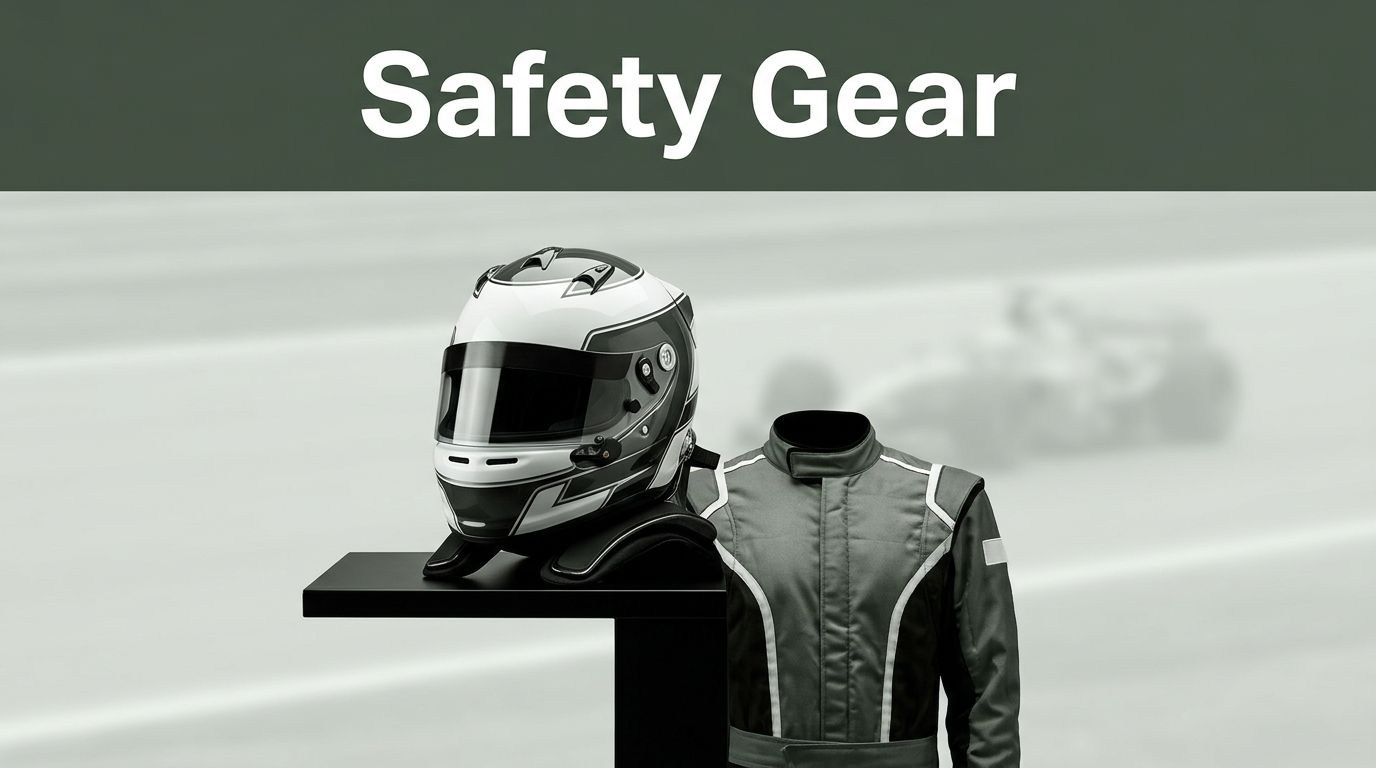
Picture this: a driver barrels into turn three at 120 mph. His car flips end over end. Flames lick the chassis. Yet he walks away with just bruises. Good car racing safety gear made the difference. That story comes from a 2025 SCCA incident report. High speeds mean flips, spins, and fires happen fast. You face impacts that crush cars but spare lives if you’re prepared.
Racing mixes thrill with real danger. Poor gear turns fun laps into hospital stays. Stats show helmets alone cut head injuries by 60% in oval racing. We’ll cover must-haves: helmets and neck guards, fire-resistant suits with gloves and shoes, harnesses, plus car setups. Knowing your car racing safety gear lets you race safe and focus on winning.
Protect Your Head First: Helmets and Neck Guards
Your head takes the worst hits in crashes. Helmets top every racer’s list as the key piece of car racing safety gear. They absorb shocks that would crack skulls. Standards like Snell SA2020 or newer keep them current. By April 2026, Snell SA2025 holds as the latest for ovals and drags. Road course folks often pick FIA 8860-2018 certified ones. These ratings prove the shell and liner handle G-forces.
Full-face helmets rule for cars. They shield your face from debris and fire. Open-face styles suit bikes, not autos. Fit matters most. A loose helmet shifts on impact, like a hat in wind. Test it: no wobble, two fingers above your eyebrows. Replace after any crash. Liners compress and lose padding.
Costs run $400 to $2,000. Beginners start at track days with SA-rated basics. Pros demand top models. NASCAR mandates them, and SCCA follows suit.

Picking the Right Helmet for Your Racing Style
Match your helmet to the track. SA-rated works for ovals and drags because it fights fire better. M-series fits road courses with better side impact protection. Sizes range XS to XXL. Check visor options: anti-fog tints help in rain.
Cooling vents beat sweat on hot days. Brands shine in 2026. Bell’s Pro Series offers SA2025 with carbon shells. Arai’s Corsair weighs light at 3 pounds. Simpson’s Bandit stays popular for value.
Key features include:
- Snell or FIA sticker inside the chin strap.
- Energy-absorbing liner without lumps.
- Quick-release shield system.
Watch fit videos from Simpson Performance. Proper setup saves lives.
Neck Protection That Could Save Your Life
Neck snaps kill more than you think. The HANS device changed that. It tethers your helmet to the harness. Forces stay even in flips, cutting whiplash by 50%. Dale Earnhardt’s 2001 crash proved the need. Now it’s mandatory in pro series like IMSA.
Amateurs use neck collars as starters. They brace without full tethering. Install HANS right: angle straps at 20 degrees off shoulders. Costs start at $600. Pros outweigh cons in high-speed cars. Street stocks pair well with 6-point harnesses.
Full-Body Shields: Suits, Gloves, and Shoes
Fire starts in seconds from fuel spills. Your suit acts as skin that won’t burn. Nomex and Kevlar fabrics resist flames up to 1,000 degrees. SFI 3-2A/5 ratings set the minimum for most tracks. Layers matter: single for autocross, three-plus for endurance races.
Underwear and socks match in fireproof material. They guard where suits gap. Wash gear gently. Inspect for tears after every event. Pro levels demand FIA Level 2 homologation. Track days accept basics.
Street clothes melt fast. Imagine flames near your legs; good gear buys escape time. Buy from certified spots like Summit Racing. Budget $300 to $1,500 per suit.

Racing Suits Rated for Real Fires
Layer count defines protection. Single-layer suits work for short sprints. Three-layer ones handle long heats. Breathable panels cut sweat. Teams pick custom colors.
Sizing uses chest-waist charts. Women find tailored fits from Alpinestars. 2026 trends favor lighter weaves without weak spots. Check FIA homologation list for approvals.
Gloves and Shoes That Grip and Guard
Gloves need SFI ratings too. Reinforced palms grip shifters slick with sweat. Fireproof backs save hands in spills.
Shoes feature thin soles for pedal feel. Ankle support prevents twists. SFI 3.3/5 certs prove heat resistance. Sneakers ignite from fuel; don’t risk it. Pair thin shoes with nomex socks. Alpinestars and Crow Enterprizes lead brands.
Stay Strapped In: Harnesses, Belts, and Car Setup
Harnesses keep you planted. 5-point or 6-point SFI 16.1 models lock you in flips. They beat stock belts that rip free. Install pulls lap belts low over hips. Anti-submarining humps stop slides.
Replace every two years. Quick-release cams speed exits. NASCAR data shows they cut injuries 40% in rolls.
Car mods tie in. Roll cages protect from roof crush. Window nets block arms flying out. Kill switches cut power fast.

Harness Systems That Hold You Secure
5-point suits most cars. Add anti-sub for 6-point. Shoulder straps angle back 20 degrees. Budget sets from RJS Racing start at $200.
Check expiration dates stamped on tags. Test fit: no pinch on long runs.
Car Mods That Boost Overall Safety
Chromoly cages beat mild steel for lightness. Door bars guard side hits. Roof nets pair with HANS.
Onboard fire systems spray foam in crashes. Plumb them to cockpit. Balance mods with track rules; SCCA inspects all. See NHRA safety guidelines for specs.
Smart Choices: Buying, Fitting, and Maintaining Gear
Skip Amazon knockoffs. They fail tests. Shop Summit Racing or track pro shops. Try on everything. Suits need arm-up reach without binds.
Starter kit: helmet, suit, gloves, shoes, harness runs $1,500. Pros hit $5,000 with HANS and cage.
Inspect weekly: cracks, frays, odors. Retire post-crash. IMSA 2026 rules demand annual certs for big series. HPDE events need basics only. Call your local track.
Use this checklist:
- Helmet padding firm?
- Suit seams intact?
- Harness no cuts?
Gear Up and Race On
Helmets with HANS top the list. Fire suits, gloves, shoes shield your body. Harnesses and cages lock the system tight. That 2025 flip survivor proves it: solid car racing safety gear turns wrecks into stories.
Safety frees you to push limits. Check your kit today. Does it meet Snell 2025? Share your setup in comments. Race smart; the track waits. As Mario Andretti said, “Speed costs money. Safety saves lives.”