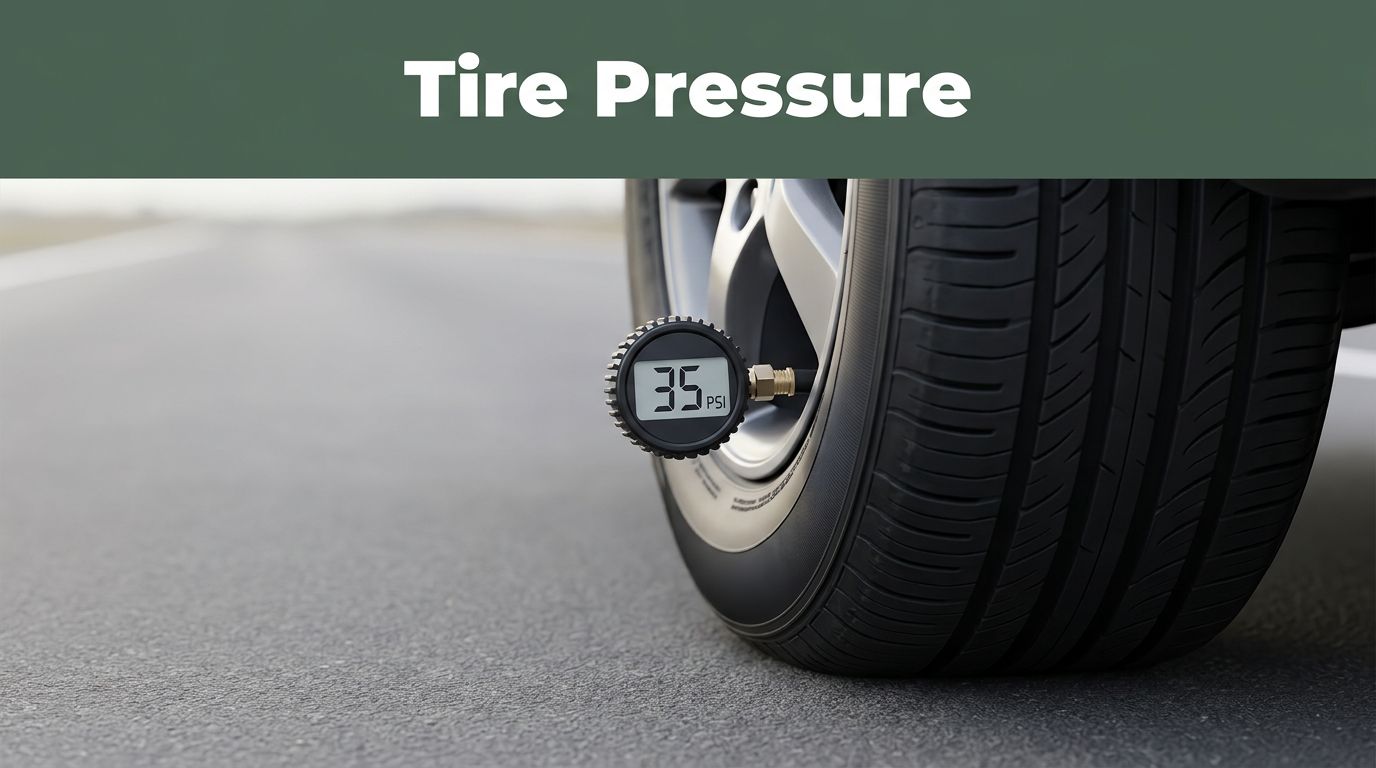
Picture this. You hop in your car for a weekend road trip. The ride feels sluggish. Turns wobble a bit. Gas gauge drops faster than usual. Then you check the tires. A quick pump of air changes everything. Suddenly, the car corners sharply. Mileage improves. The drive turns smooth.
Tire pressure is the amount of air inside your tires that pushes outward against the walls. Experts measure it in pounds per square inch, or PSI. This force shapes how tires meet the road. It decides the contact patch, that flat spot gripping pavement.
Right pressure boosts handling. It saves fuel. Tires last longer. Safety rises too. Underinflated tires cause accidents and blowouts. Overinflated ones skid in rain. You will learn the basics next. Then see real effects on your drive. Finally, get simple steps to check and fix it yourself.
What Tire Pressure Means for Everyday Driving
Tires work hard every mile. Air inside them supports your car’s weight. Too little air, and they sag. Too much, and they bulge. Manufacturers set a sweet spot. Most cars run best at 30 to 35 PSI. Check your door sticker for exact numbers.
Heat plays a role. Tires warm up as you drive. Pressure climbs 1 PSI for every 10 degrees Fahrenheit. Always measure when cold. Sidewalls show a max PSI. That is a safety limit, not your goal. Exceed it, and tires wear fast.
Air leaks slowly. Road bumps and heat make it worse. A fun fact: each 1 PSI drop cuts fuel economy by 0.2 percent. Over months, that adds up.

PSI Explained: The Simple Science Behind It
PSI stands for pounds per square inch. Think of air molecules as tiny bouncy balls. They slam into tire walls billions of times a second. That creates outward push.
Low PSI makes tires squishy, like a bike tire after a long ride. The contact patch grows wide but shallow. It flexes too much. High PSI shrinks the patch to a narrow strip. The tire bounces over bumps.
Standard cars need 32 to 35 PSI. Trucks and SUVs run higher, around 40 to 50, because of heavier loads. In short, match the maker’s spec. Your drive stays balanced.
Your Vehicle’s Perfect Pressure: Where to Look
Find your numbers fast. Open the driver’s door. Look at the jamb sticker. It lists PSI for front and rear tires. Some show loaded and unloaded values.
Your owner’s manual has it too. Or check the fuel door placard. Sidewall max PSI is just a cap. Ignore it for daily use.
Seasons matter. Cold mornings drop pressure. Add 1 PSI for winter. Load the car with passengers? Bump it up slightly. Example: a sedan might say 33 PSI front, 35 rear. Match all four tires. Uneven pressure pulls the car sideways.
For more on vehicle specs, see the NHTSA tire information page.
How Tire Pressure Transforms Your Vehicle’s Performance
Wrong pressure hurts everything. Right pressure shines. You feel it in turns, stops, and mileage. Studies back this up. The National Highway Traffic Safety Administration links underinflation to 11 percent of tire-related crashes.
AAA tests show 1 PSI low slashes MPG by 0.2 to 3 percent. Overinflation kills wet traction. Balance matters most.
Drivers notice quick. One guy fixed his low tires. His commute MPG jumped 2 points. Another avoided a hydroplane skid thanks to fresh air.
Smoother Handling, Quicker Stops, and Better Control
Optimal PSI gives even contact. Tires grip firm in curves. Brakes bite straight.
Underinflated tires squirm. They hydroplane easy in rain. Stopping distance grows 10 feet per 10 PSI low, per tests. Overinflated ones bounce. You lose feedback from the road.
Snow worsens it. Low pressure digs in too much. High skips over ice. Keep it right. Your control stays sharp.

Fuel Savings and Longer Lasting Tires
Right PSI lets tires roll free. Less drag means better MPG, up to 3 percent gain. That saves over $100 a year on gas for average drivers.
Underinflation wears edges first. Friction builds heat. Overinflation thins the center tread. Blowouts rise from flex.
Tires last 50,000 miles at best pressure. Wrong PSI cuts that by 20 percent. Check often. Your wallet thanks you.
Safety First: Avoiding Blowouts and Skids
Poor pressure kills. It causes over 400 deaths yearly in the US, per recent data. Low tires overheat and fail. High ones crack on potholes.
Your TPMS light warns early. It flashes if pressure drops 25 percent. Ignore it at your risk. Right PSI prevents skids too. Tires stay planted.
For crash stats, review this NHTSA tire safety report.
Easy Ways to Check and Set Tire Pressure Right
Do it monthly. Or before long trips. It takes 10 minutes. No shop needed.
Park on level ground. Wait till morning for cold tires. Tools cost little. Results pay big.
Common mistake: hot checks. Pressure reads high. You deflate too much.
Tools You Need and Quick Prep Steps
Grab a digital gauge. They run $10. Accurate to 0.5 PSI. Stick types work too. Skip gas station pumps alone. They lie often.
Find a compressor. Home garage ones are best. Or use free stations at stores.
Prep: clean valve stems. Twist caps off. Press gauge firm. Read quick before air escapes.
Step-by-Step: Measure, Adjust, and Verify
First, note your spec from the door sticker.
Kneel at each tire. Press gauge. It beeps or shows PSI.
Too high? Press valve core with a tool. Let air hiss out. Recheck.
Too low? Attach hose. Add short bursts. Stop at target.
Do all four. Check spare too. Drive a mile. Feel the change. Apps like TireCheck scan via Bluetooth for extras.
Recent AAA advice stresses cold checks for accuracy; see their tire maintenance guide.

Proper pressure makes drives safer, cheaper, and more fun. You save gas. Tires wear even. Handling sharpens. Crashes drop.
Check your tires this week. Grab a gauge today. Share your PSI story in comments. What changed for you? Small habits win big. Drive smart.