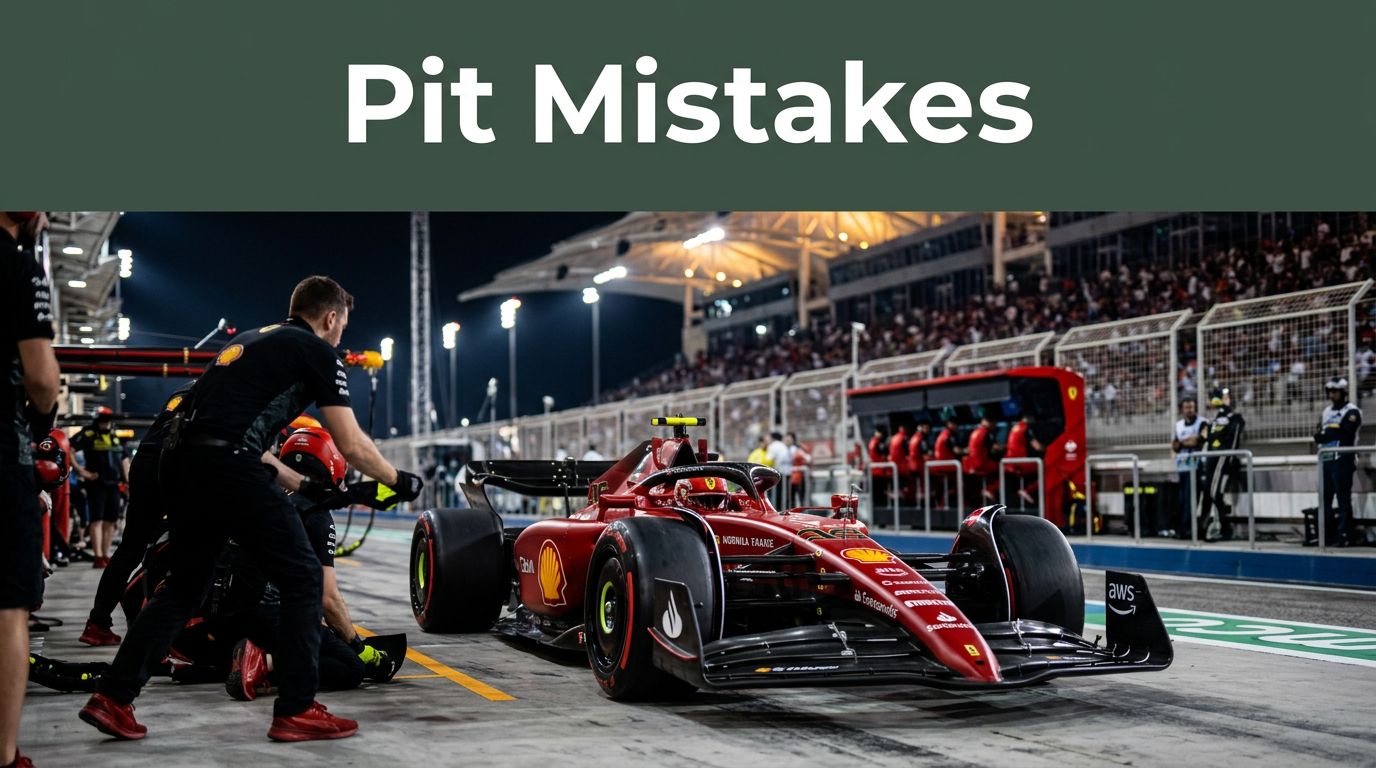
Picture Ferrari cruising toward victory at Monza in 2025. The crowd roars. Then a botched pit stop drops Charles Leclerc to third. Fans groan as rivals slip past on fresh tires.
Strategy often trumps raw speed in racing. Top teams like Ferrari, Red Bull, and Mercedes still fall into traps. These errors turn sure wins into heartbreaks.
You see them in F1, NASCAR, and IndyCar. This post covers common strategy mistakes on pit timing, tires, fuel, weather, and comms. Spot them to understand why races flip.
Pit Stop Timing Blunders That Ruin Winning Chances
Pit stops make or break races. Teams juggle data, rivals, and traffic. One wrong call costs positions.
Take NASCAR’s Daytona 500. A team pits early, and slower cars block the exit. The leader loses clean air and fights back for laps. In F1’s Silverstone 2025, similar chaos hit McLaren. They read data wrong and pitted into traffic.
Seconds count here. A stop takes 2.5 seconds in F1, but delays add up. Rivals gain track position. Lap times suffer in dirty air.
Poor timing stems from rushed decisions or ignoring rival moves. Teams simulate thousands of scenarios, yet real races surprise them. Results? Lost podiums.

Pitting Too Early and Losing Precious Positions
Teams pit ahead of plan to undercut rivals. It backfires when traffic hits.
Red Bull tried this in 2024 Bahrain GP. Max Verstappen jumped in first. Fresh tires helped, but he rejoined behind slower cars. Clean air vanished. Recovery took 10 laps.
You lose momentum fast. Simulations help, but add buffers for safety cars. Check rival pit windows first. Better data reads prevent this trap.
Hesitating on the Pit Call During Traffic Jams
Delay pits, and dirty air traps you. Slower cars ahead cost 1-2 seconds per lap.
Mercedes faced this at 2025 Imola. George Russell waited too long. Lapped traffic jammed him. He reset the whole strategy.
Hesitation cascades. Fuel burns faster. Tires wear unevenly. Call pits early in jams. Real-time lap deltas guide you.
Blowing the Safety Car Opportunity
Safety cars bunch the field. Pits become cheap with neutral speed.
IndyCar’s 2025 Indy 500 showed the cost. A team stayed out. Rivals pitted free, gaining 20 seconds. Bunching let them leapfrog.
Pit lane rules favor this. Full fields amplify gains. Math proves it: stationary time drops under yellow. Always plan for it.
Tire Strategy Mistakes That Shred Your Pace
Tires dictate pace. Softs grip hard but fade quick. Mediums balance. Hards endure.
Track temps change everything. Hot asphalt kills softs faster. Pirelli data through 2026 shows softs last 12-18 laps in F1. Pirelli’s F1 tire guide breaks down wear rates.
Le Mans 2025 endurance race highlighted picks. A prototype team chose softs for a stint. Overheating dropped them back. Stint planning rules.
Focus stays on selection, not pits. Wrong compound shreds lap times.
Grabbing Soft Tires for a Long Haul
Softs shine early. They degrade mid-stint on long runs.
McLaren picked them at 2025 Spanish GP. Lando Norris led briefly. Grip vanished after 15 laps. Overheating forced an extra stop.
Monitor delta times closely. Rising gaps signal fade. Switch to mediums sooner. Data sensors track it live.
Sticking Rigidly to a One-Stop Plan
One-stop saves time. Tracks evolve, forcing two.
2024 F1 Hungary GP turned chaotic. Teams clung to one-stop. Tire graining hit. Undercut worked for flexible foes.
Know undercut basics. Pit early, emerge faster. Pivot when deltas climb. Flexibility wins.
Overlooking How the Track Changes Tires
Tracks rubber in. Early choices fail later.
Brazil 2025 wet-dry shift caught teams. Initial hards slicked up. Sensors missed the evolution.
Real-time data rules. Adjust for grip buildup. Test compounds in practice.
Fuel Load Errors That Slow You Down or Strand You
Fuel trades pace for range. Heavy loads slow you. Light ones risk stops.
F1 bans refueling since 2010, per FIA rules. NASCAR allows fuel-mileage plays. 2025 Talladega gambles showed it. Leaders stretched fuel, but one miscalc ran dry.
Sims balance it. Overlap with tires stays minimal.
Packing Too Much Fuel and Crawling Early
Extra fuel adds weight. 10kg costs 0.3 seconds per lap.
Lewis Hamilton loaded conservative at 2024 Vegas GP. He crawled laps one through 10. Rivals pulled away.
Lighten up when safe. Weight drops as you burn. Pace surges late.
Skimping on Fuel and Risking a Splat
Short stints tempt light loads. Misjudge, and you coast dry.
Verstappen nearly did at 2025 Australia. Engine sputtered mid-overtake. Lift-and-coast saved him.
Conserve with throttle tricks. Monitor usage live. Margins stay tiny.
Weather and External Factor Oversights That Flip Races
Rain flips strategies. Radar misses cost big.
2025 F1 Suzuka brought monsoons. Teams ignored drying lines. Wet tires stayed too long. F1’s Suzuka 2025 report details the mess.
Virtual safety cars add twists. Track drying demands quick calls. Team radio guides drivers.
Differentiate from tires. Calls center on timing, not compounds.
Teams read radar wrong. Drying tracks fool them. Pit intermediates late, lose grip.
Suzuka saw leaders aquaplane. Outsiders on slicks won. Radar plus spotters work best.
Communication Breakdowns That Leave Drivers Hanging
Comms link pits and cockpit. Glitches doom plans.
Drivers hear garbled calls. Misunderstand tire picks or traffic.
2025 Monza Ferrari blunder stemmed from radio static. Leclerc pitted blind. No clear “box now.”
Static, accents, noise kill clarity. Backup channels help. Repeat key calls.
Poor comms cascade. Drivers push wrong tires. Fuel blindsides them.
Practice radio drills. Clear scripts save races. Tech fails, so humans adapt.
Reliable links build trust. Drivers execute better.
Fix These Mistakes and Watch Races Differently
Pit blunders, tire flops, fuel woes, weather ignores, and comms fails top the list. They cost victories yearly.
Spot them next race. You’ll see strategy unfold.
Master timing first. It hits hardest.
What mistake burns you most? Share in comments. Track your favorite series closer. Wins await the sharp eye.
(Word count: 1487)