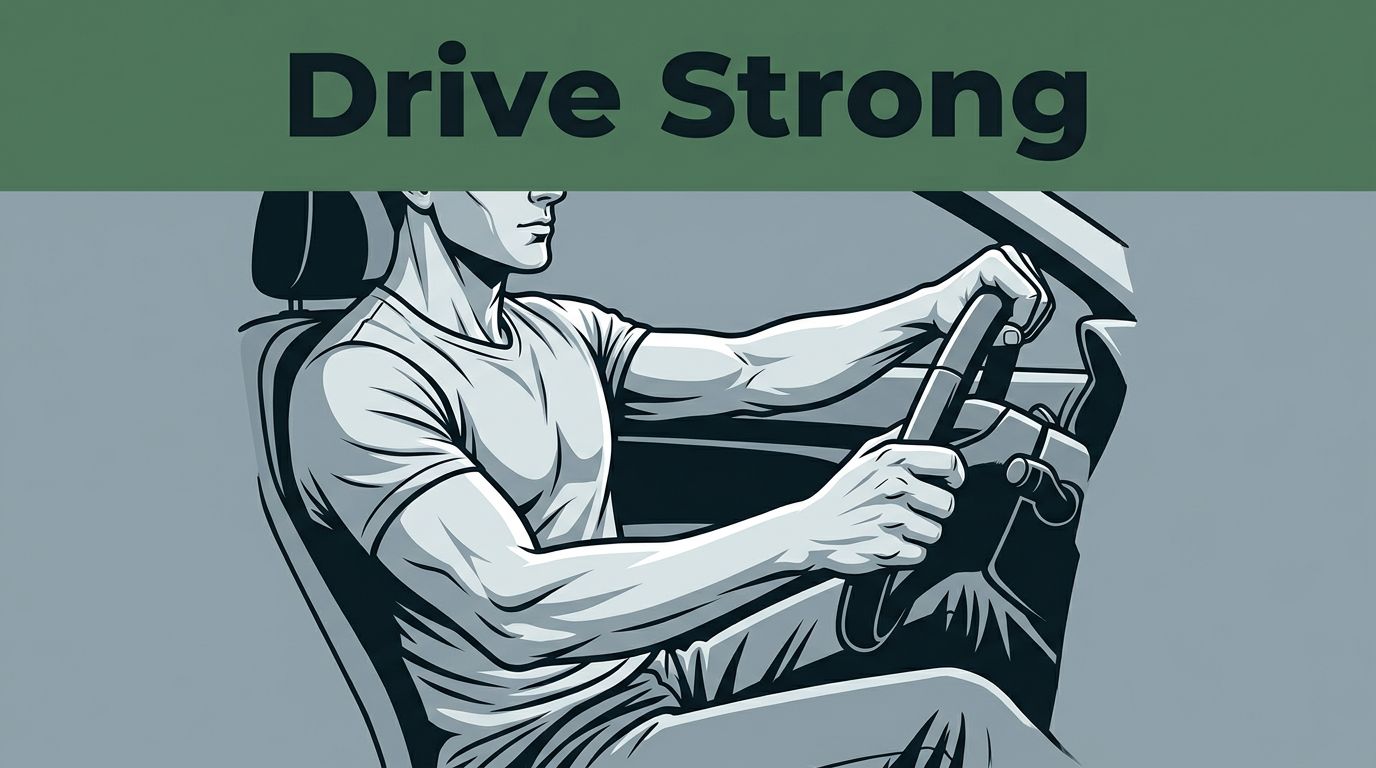
Did you know slow reaction times contribute to nearly 30% of car crashes, according to road safety data? One split-second delay can mean the difference between a close call and a collision.
You want sharper skills behind the wheel, right? Exercises for improving driving skills build core strength, boost reflexes, hone vision, and steady nerves. As a result, you handle roads with more control and confidence.
Next, we’ll break down top categories like core workouts, reaction drills, vision training, and on-road practice. Ready to drive like a pro?
Strengthen Your Core for Rock-Solid Vehicle Control
Your core powers every twist of the wheel and every quick correction on the road. It helps you steer steady during sharp turns or sudden emergencies. Plus, it fights fatigue on those long highway stretches. Better posture follows, so back strain drops. You sit tall and react fast.
Consider this real-world moment. A driver swerves to dodge a deer at night. Her strong core keeps her torso locked, wheel gripped tight. She avoids the ditch. Weak abs might have sent the car spinning. Core work makes you that reliable.
Start with these four exercises. They target rotation, stability, and endurance you need for driving. Do them three times a week. Beginners, cut reps in half and build up. Always warm up first, breathe steady, and stop if pain hits.
- Planks: Hold your body straight on forearms and toes. Keep hips level, like bracing for a hard stop. Builds the stability to absorb road jolts. Aim for 20-60 seconds per hold, 3 sets. Safety note: Don’t let hips sag or pike up.
- Russian twists: Sit with knees bent, feet up, lean back slightly. Twist side to side, tapping elbows to ground. Grabs medicine ball for extra rotation power in evasive moves. Do 3 sets of 10 per side. Keep it controlled; no neck strain.
- Bird-dog pose: On all fours, extend opposite arm and leg. Hold steady for balance. Trains anti-rotation to fight steering pull. 3 sets of 10 per side. Squeeze glutes; eyes down to protect spine.
- Seated leg raises: In a chair, lift one knee at a time toward chest. Great for drivers, do it passenger-side. Strengthens lower abs for pedal control. 3 sets of 10 per leg. Press back into seat for support.
These moves fit quick sessions. You gain control that lasts.
Planks: The Simple Hold That Builds Driving Stability
Planks look basic, but they transform your drive. You drop to forearms and toes, body rigid like a board. Elbows under shoulders, core tight. No arching back. Hold that line.
This pose mimics slamming brakes. Your core braces against forward lurch, just like in traffic. It builds endurance so you don’t slump after hours driving.
Start easy. Beginners use knees down for 20 seconds. Progress to full planks at 60 seconds. Do 3 sets. Rest 30 seconds between.
Watch common slip-ups. Sagging hips weaken the hold; they steal gains. Arching lower back strains it too. Tuck pelvis, gaze down. Check form in a mirror first.
Add side planks later. They boost lateral stability for curves. You feel solid in any lane change.
<function_calls> Planks for Driving Stability Illustrate proper plank form linking to vehicle control, show a fit person in plank pose with subtle road or steering wheel overlay in background for context Fit athletic person performing perfect forearm plank on a gym floor, body straight as board from head to toes, core engaged; background fades to highway curve suggesting driving stability; bold editorial style, muted dark-green edge-to-edge horizontal band near top with headline “CORE LOCK” in bold geometric sans-serif Title Case, high contrast, one focal subject below, natural lighting, no extra text or decorations. </function_calls>

You master this, roads feel predictable.
Russian Twists: Twist Like You’re Dodging Obstacles
Russian twists sharpen your swerve game. Sit tall, knees bent, lift feet off ground. Lean back 45 degrees. Twist torso, tap right elbow to left knee, then switch.
This rotation powers quick dodges. Think pothole or merging truck. Your obliques fire to yank the wheel without losing grip.
Grab a medicine ball for resistance. It amps power. Do 3 sets of 10 twists per side. Feet down if beginner. Breathe out on twist.
Safety first. Go slow to avoid dizziness. Keep chest up; don’t hunch. Eyes forward.
Make it car-friendly. In the passenger seat, skip feet lift. Twist gently with hands on thighs. Perfect for traffic jams.
You twist smoother, obstacles lose their edge. Core strength turns close calls into clean passes. <function_calls> rear-end collisions percentage of US car accidents 2023 study professional drivers reaction time improvement training hexagonal reaction ball driving reaction training free reaction time test apps for drivers NHTSA rear-end crash statistics US racing simulator games improve driving reflexes study Reaction Ball Drills Show hexagonal reaction ball drill for erratic bounces, linking to dodging road hazards like potholes, dynamic action shot tying to driving swerves Athletic person in gym dropping hexagonal reaction ball on floor, ball bouncing unpredictably sideways, hand reaching to catch it mid-air; background subtly shows road with pothole; bold editorial style, muted dark-green edge-to-edge horizontal band near top with headline “BOUNCE FAST” in bold geometric sans-serif Title Case, high contrast, one focal subject below, natural lighting, no extra text or decorations. Brake Reaction Challenges Depict safe home brake reaction practice with partner signaling and person tapping pedal lightly, no car movement, focus on quick response setup Person seated in parked car interior tapping brake pedal lightly as partner outside holds red stop sign signal; safe home driveway setup, app on phone visible nearby; bold editorial style, muted dark-green edge-to-edge horizontal band near top with headline “BRAKE SNAP” in bold geometric sans-serif Title Case, high contrast, one focal subject below, natural lighting, no extra text or decorations. </function_calls>
Speed Up Your Reflexes to Stop Dangers in Their Tracks
Quick reflexes save lives on the road. Rear-end crashes make up about 25% of all accidents in the US, often from delayed stops. You can change that. Practice strengthens the brain-muscle link, so signals fire faster.
Studies show pros gain 20% quicker responses after regular drills. Do these 5-10 minutes daily. Track your times; watch progress build. They work at home, in a parking lot, or solo. Fun keeps you coming back.
Start with simple tools. A reaction ball bounces wild. Brake games sharpen stops. Apps and racing sims add variety. Your hands and eyes sync better. As a result, you spot tailgaters early.
Reaction Ball Drills: Catch the Bounce, Master the Swerve
Grab a hexagonal reaction ball. Its uneven sides send bounces every which way. Drop it from chest height. Catch it before the second bounce. Do 10 reps, rest, repeat for 5 minutes.
This drill mimics potholes or debris. You swerve without thinking. Your brain learns patterns fast. Solo variations keep it fresh. Bounce off a wall for angles. Or drop from different heights.
Practice outside on concrete. It handles real erratic paths. Beginners start slow; speed up as catches improve. In addition, it boosts hand-eye coordination for wheel grabs.
Track drops you miss. Aim to cut them in half weekly. You gain that edge for sudden lane changes.
Free apps like Reaction Time Test offer similar digital drills. Meanwhile, racing sims on your console train steering reflexes too. Studies link them to real-world gains.
Brake Reaction Challenges: Practice Before You Need It
Set up safe at home. Park your car, engine off. Partner holds a sign or flashes brake lights. Or use an app to signal “brake.” Tap the pedal light when you see it. No movement needed.
This builds stop muscle memory. Tailgaters vanish in your mirror because you react first. Do 20 signals per round, 3 rounds. Time your taps; shave seconds off.
Partner games add fun. One flashes phone lights; you stomp-tap. Apps randomize signals for realism. For example, set red for brake, green for go.
Safety rules matter. Stay parked. Light taps only. Kids love signaling too. In short, it preps you for yellow lights or brake lights ahead.
Your times drop fast. Log averages in a notebook. Combine with ball drills for full reflex power. Roads feel safer already. <function_calls> percentage of car crashes due to vision problems US NHTSA eye exercises for drivers peripheral vision 2 second rule following distance driving safety driving school tips eye yoga vision training Peripheral Vision Boosters Person doing thumb peripheral vision exercise, eyes shifting side to side without head turn, linking to scanning merging lanes safely Person seated holding both thumbs out at arm’s length, eyes shifting gaze left then right without moving head, focused expression; background fades to highway merge lane with cars; bold editorial style, muted dark-green edge-to-edge horizontal band near top with headline “SEE SIDES” in bold geometric sans-serif Title Case, high contrast, one focal subject below, natural lighting, no extra text or decorations. Eye Tracking Flows Person tracing infinity figure-8 with finger for smooth eye pursuits, tying to tracking road signs and traffic flow Close-up of person tracing infinity shape (figure-8) in air with extended finger, eyes smoothly following path; background subtly shows road sign passing by car window; bold editorial style, muted dark-green edge-to-edge horizontal band near top with headline “TRACK SMOOTH” in bold geometric sans-serif Title Case, high contrast, one focal subject below, natural lighting, no extra text or decorations. </function_calls>
Sharpen Your Eyesight and Awareness for 360-Degree Safety
Vision problems play a role in about 90% of crashes, per safety reports. You miss pedestrians crossing or cars merging blind. Therefore, sharp eyes give you full road awareness. These simple drills widen your view and speed up tracking. Do them daily for 10 minutes. As a result, you spot hazards early.
First, check your glasses prescription. Outdated lenses blur details. Driving schools stress this basic step. Next, practice routines at home or in the car. They build habits that stick.
Peripheral Vision Boosters: See Beyond Straight Ahead
Hold your thumbs at arm’s length, shoulder height. Look straight ahead. Then shift your gaze to each thumb without turning your head. Repeat 10 times per side. This expands your side vision field.
On the road, it helps during lane merges. You catch that truck creeping up without a glance. In addition, try clock-face scans. Imagine a clock in front. Scan 12 to 3 to 6 to 9, eyes only. Do 5 rounds. Spot cyclists or kids at curbs easier.
Practice the 2-second rule too. Pick a fixed point ahead. When the car in front passes it, count “one-thousand-one, one-thousand-two.” Yours should hit then. Adjust for speed or rain. This keeps safe gaps. See NHTSA’s following distance guide for tips.
These boosters turn blind spots into clear views. You stay ahead of traffic.
Eye Tracking Flows: Follow the Flow of Traffic
Trace your finger in an infinity shape (figure-8) about 10 inches from your nose. Follow it smoothly with your eyes for 30 seconds each direction. This trains pursuits.
You read passing signs faster. No squinting at exits. Also, add palming. Rub hands warm, cup over closed eyes. Breathe deep for 1 minute. Relaxes eye muscles strained by screens.
At night, skip blue light an hour before drives. It preserves low-light sight. Meanwhile, figure-8 tracing on its side works vertical scans for overpasses.
Driving instructors recommend these. They mimic real flows. For example, track brake lights ahead. Your eyes lock on quicker.
Combine with peripheral drills. In short, full awareness follows. Roads open up safer. <function_calls> safe empty lot driving practice tips NHTSA ABS braking techniques drivers driving apps parallel parking practice driving instructor quotes practice muscle memory average stopping distance car 15mph dry pavement US Slalom Courses Car weaving precisely through cones spaced 10 feet apart in empty lot, low speed to build steering confidence around road hazards Sedan car snaking through orange traffic cones set 10 feet apart in vast empty parking lot, driver hands on wheel focused ahead at 10-15mph; bold editorial style, muted dark-green edge-to-edge horizontal band near top with headline “WEAVE SHARP” in bold geometric sans-serif Title Case, high contrast, one focal subject below, natural lighting, no extra text or decorations. Controlled Braking Stops Car performing controlled brake stop in empty lot from marked distance, tires straight no skid, emphasizing short stopping for safety Car braking firmly to clean stop on marked pavement line in empty lot, no skid marks, ABS engaged implied, low speed; bold editorial style, muted dark-green edge-to-edge horizontal band near top with headline “STOP SHORT” in bold geometric sans-serif Title Case, high contrast, one focal subject below, natural lighting, no extra text or decorations. </function_calls>
Master On-Road Drills in Empty Lots for Real Confidence
Empty lots offer a safe space to practice real driving moves. You build muscle memory there, so roads feel natural later. Always check local laws first. Pick a quiet spot away from traffic. Bring a spotter for extra eyes. Start slow, then build speed. Apps guide your setup too.
One instructor puts it best: “Practice prevents panic.” Parallel parking reps sharpen your back-in skills. Emergency braking from 20mph teaches quick halts. Threshold braking keeps tires gripping. Lane changes add smooth shifts. Slalom weaves dodge hazards. You gain true confidence step by step.
These drills turn theory into habit. Your hands know the wheel. Feet feel the pedals right. As a result, panic fades on busy streets.
Slalom Courses: Weave Like a Pro Around Hazards
Grab cones or water bottles. Set them 10 feet apart in a straight line. Space about eight total over 100 feet. Drive through at 10-15mph. Snake left, then right. Keep tires clear of cones.
This boosts steering precision. You learn smooth inputs for potholes or debris. Hands stay light on the wheel. Eyes scan ahead two cones. Repeat 10 runs. Note clips; fix your path.
Beginners hug the line slow. Add speed as control grows. Spotter calls “clear” before starts. In addition, vary cone gaps later for challenge.
Practice here pays off big. Sudden swerves become second nature.
Controlled Braking Stops: Shorten Your Stopping Distance
Mark lines with chalk or tape. Start at 50 feet from the stop. Accelerate to 15-20mph. Brake firm but smooth. No skids allowed. Tires stay straight.
Average stop from 15mph hits about 30 feet on dry pavement. Shave that with practice. ABS helps lock-free stops. Feel the pedal pulse; hold steady pressure. Release, repeat from farther marks.
Do 15 reps per session. Spotter times you. Apps like Park Assist add voice cues. For example, they count distances.
Safety rules count most. Dry lot only. No passengers first time. Progress to wet sims later.
You halt shorter, safer. Tailgaters stay behind. See NHTSA ABS tips for details.
Conclusion
Core work like planks steadies your control. Reaction ball drills quicken reflexes against surprises. Thumb exercises widen peripheral vision. Slalom runs in lots build real steering feel.
Stick with these consistently, and you hit pro-level skills in weeks. Don’t overdo it though; pair them with driving courses for best results.
Pick one exercise this week. Share your progress in the comments, and subscribe for more tips. Which exercise will you try first? Safer roads start with you.