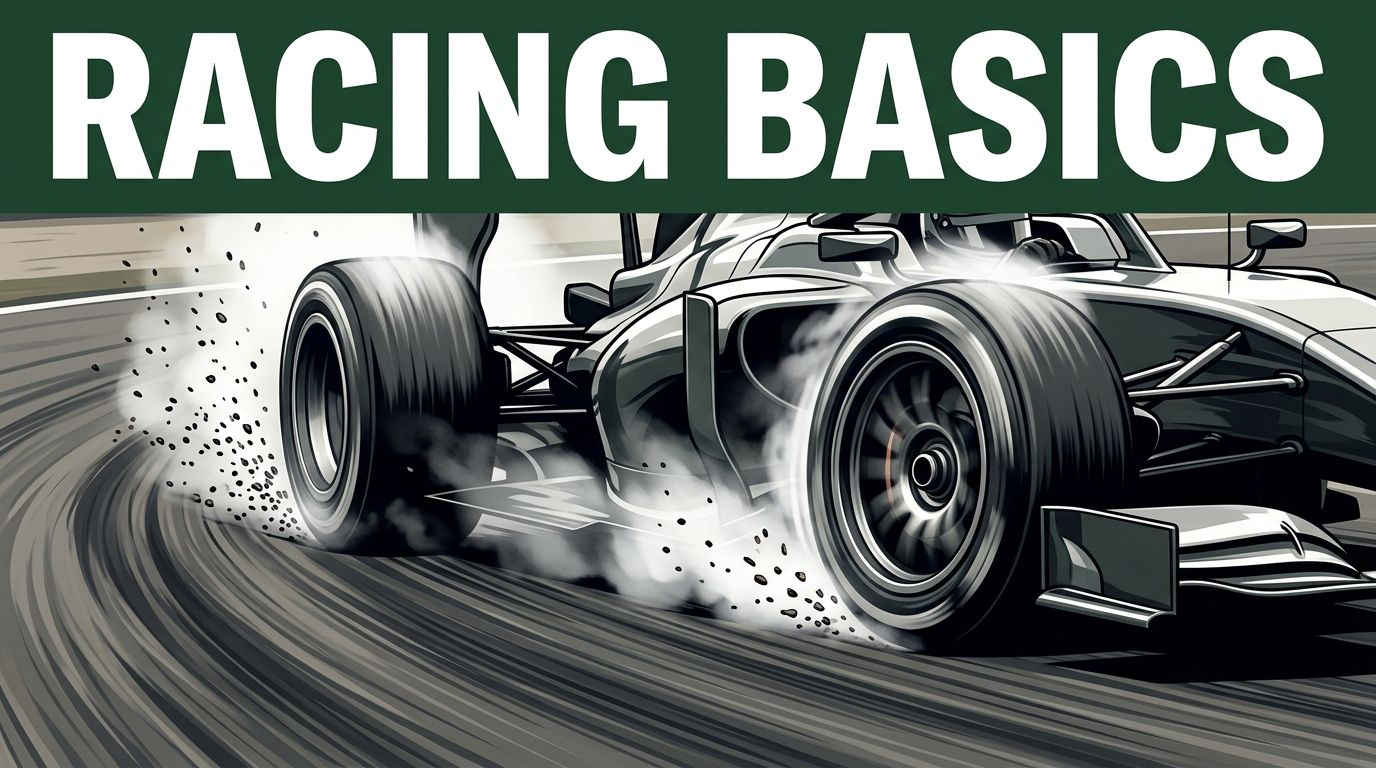
Picture this: you line up for your first track day, heart pounding. The flag drops, you rocket off the line. But turn one hits fast. You brake late, tires screech and lock. Your car spins into the gravel. Race done in seconds.
Racing hooks you with speed and competition. Yet for new drivers, small errors punish hard. They cost time, wreck cars, or worse. This post covers five common beginner driving mistakes in racing. You’ll get simple fixes to drop lap times and stay safe.
Brake smarter, pick better lines, shift smooth, look ahead, check setup. Let’s start with the biggest killer.
Braking Too Late: The Top Reason Beginners Spin Out
New racers often wait too long to brake. They see the turn closing in and stab the pedal. Tires lock up because momentum overwhelms grip. The car fishtails or slides off track.
Physics keeps it simple. Your car builds speed, tires have a grip limit. Brake late, and weight shifts forward fast. Front tires lose traction first. You spin.
Tracks show this often. At hairpin turns like Laguna Seca’s Corkscrew, late braking sends cars wide or into walls. Data from lap timers proves it. Riders who brake early gain two seconds a lap.
Fix it with brake markers. Pick spots like cones or billboards. Brake smooth, not hard. Use trail braking to settle the car mid-turn.
For more on track physics, check Grassroots Motorsports’ braking guide.

SectionTitle: Braking Too Late, imageIntent: Illustrate late braking causing tire lockup and spin in a hairpin.
Spotting Your Braking Point Early
Visual cues help you brake on time. Spot a cone 100 feet before the turn. Or use a faded billboard as your marker. Practice in slow lapping sessions first.
Compare results. Late braking might take 2.5 seconds to slow from 100 mph. Brake early, you hit 2.1 seconds. Smooth pressure beats stabbing every time.
Start conservative. As you build feel, markers get precise. In addition, log your laps to track progress.
Trail Braking Tricks That Feel Natural Fast
Trail braking eases you into turns. Brake hard on entry, then gradually release through the apex. Weight shifts help tires turn better.
Don’t overdo it, or you’ll understeer. Pair with heel-toe downshifts for smooth power. Practice in a parking lot: brake, blip throttle, match revs.
After one session, it clicks. Your entries tighten, exits speed up. Meanwhile, tires last longer too.
Picking the Wrong Racing Line and Throwing Away Seconds
The racing line defines your fastest path. Beginners cut inside too soon or drive straight. They lose momentum scrubbing speed.
Aim wide on entry, clip apex late, exit straight. This preserves speed through the turn. An early apex tightens your radius. You slow more than needed.
One track example: a 90-degree right. Wrong line costs 0.5 seconds. Over 10 turns, that’s five seconds a lap gone. Smooth arcs beat sharp cuts always.
Visualize it like this. Straight lining feels direct but shortens straights. Proper lines stretch your speed zones.
See Skip Barber’s racing line basics for diagrams.
The Perfect Late Apex Line Explained
Start outside on approach. Turn in smooth, brush apex late. Unwind steering for straight exit. Speed carries you faster.
Early apex fools you. It looks tight but kills exit drive. Practice cone weaves at half speed. Gradually up pace.
After 10 laps, times drop. In short, vision and patience win here.
Why Tight Lines Kill Your Momentum
Think highway merges. Squeeze too tight, you brake hard. Same in racing. Tight lines scrub tire speed.
Fix comes from planning ahead. Map the full turn path. Visualize entry to exit before braking.
As a result, your car flows better. Laps feel effortless.
Over-Revving with Jerky Shifts That Hurt Your Car
Throttle control matters as much as brakes. Beginners mash gas or shift jerky. Engine bogs or hops, tires spin uselessly.
Rev-matching fixes this. Match engine RPM to gear speed on downshift. Signs of trouble include wheel hop or flat spots.
Most cars peak power at 5,000-7,000 RPM. Smooth shifts keep you there. Jerky ones stress clutches and engines.
Progressive throttle builds grip. Roll on smooth, avoid snaps.
For heel-toe details, read MotorTrend’s downshift tutorial.
Mastering Heel-Toe Downshifts Without Practice Gear
Blip the throttle while braking. Match revs to transmission speed. Clutch in, shift, clutch out smooth.
Start low gear in a lot. Feel the sync before speed. Numbers help less than seat feel.
Soon, it becomes reflex. Turns flow without drama.
Throttle Discipline to Keep Tires Happy
Snap throttle kills grip out of turns. Roll on to 50% mid-exit. Grip builds as weight settles.
Example: slow corner exit. Smooth input nets 70 mph. Jerky gets 60 mph tops.
Besides, tires wear even. Laps stay consistent longer.

SectionTitle: Over-Revving with Jerky Shifts, imageIntent: Show heel-toe technique in action from driver’s perspective.
Staring at Your Nose Instead of the Next Turn
Eyes control the car. Beginners fixate on the hood or close obstacles. The car goes where you look.
Look where you want to go. Scan 3-5 turns ahead. Hands follow vision naturally.
Helmets limit view sometimes. Clean visors help. Walk the track first to memorize.
Bad vision adds seconds. Fast laps come from smooth steering.
Eye Discipline Drills That Stick After One Session
Check mirrors every corner. Verbalize your next turn. “Outside, apex, exit.”
Slow laps highlight stare spots. Fast ones reward scanning.
Muscle memory builds quick. In addition, confidence grows.
Overlooking Simple Setup Checks Before Green Flag
Rookies skip basics. Low tire pressure causes failure. Dry fluids seize engines.
Always check tires, brakes, fluids. Balance front and rear for grip.
Safety gear counts too. Helmet snug, suit fire-resistant.
A quick list prevents DNFs.
| Check Item | Why It Matters | Quick Test |
|---|---|---|
| Tire Pressure | Grip and wear | Gauge cold at 32 psi front, 30 rear |
| Fluids | Cooling, power | Dipstick full, no leaks |
| Alignment | Straight tracking | Garage laser tool |
| Safety Gear | Protection | Fit test pre-grid |
This table saves time. Adjust for your track surface. Hot tires rise 10 psi, so monitor.
Details from NASA Racing’s setup tips.
Tire Pressure and Alignment Wins You Free Speed
Cold pressures set baseline. Heat up 8-12 psi on track. Check after cool down.
Toe-in stabilizes. Zero toe front for tracks. Phone apps measure easy.
Free speed comes without talent. Everyone gains here.
Every pro started as a beginner. They fixed these common beginner driving mistakes in racing one lap at a time. Braking late spins you. Wrong lines slow you. Jerky shifts hurt gear. Nose staring veers wide. Skipped checks end days early.
Hit the track more than sims. Real feel trumps pixels. Share your first spin story in comments. Book a coach session now.
Faster laps wait. Go get them.
(Word count: 1487)